
Tracking depressive state and treatment response from wearable data.
A research-stage platform exploring how everyday wearable data can support continuous, objective tracking of depression and treatment response between clinical appointments.
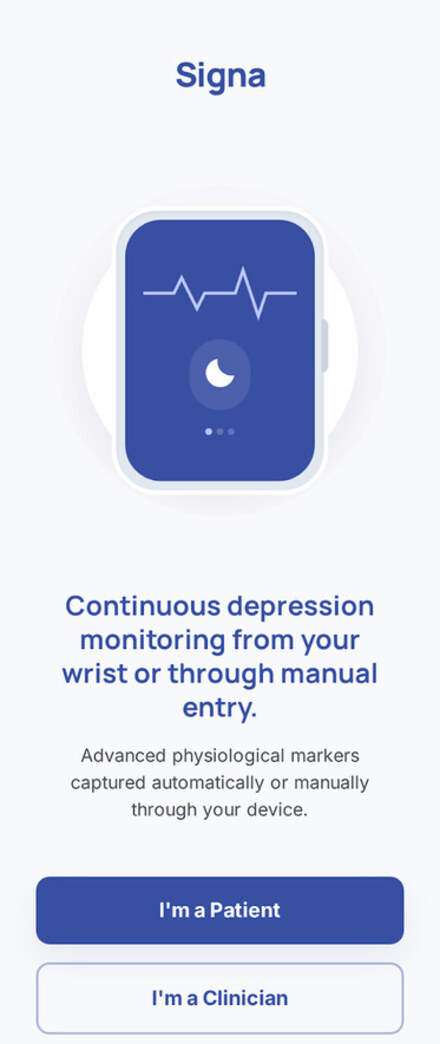
Mental health assessments often take place weeks or months apart. Important changes in sleep, activity, physiology, symptoms, and treatment response can occur between appointments. By the time these changes are discussed during a clinical appointment, opportunities for earlier support may already have been missed.
Wearable devices collect health and behavioural data every day. SIGNA explores how these signals may contribute to more continuous and objective monitoring of mental health between clinical assessments.
Patterns in heart rate variability may provide useful physiological context.
Sleep duration, quality, and disruption may reflect important changes over time.
Daily movement and routines can provide additional behavioural signals.
SIGNA explores patterns across multiple signals rather than relying on a single measure.
SIGNA analyzes wearable-derived physiological and behavioural patterns to explore changes associated with depressive states and treatment response. The platform is being developed to generate objective, longitudinal insights that may support more proactive and personalized mental health care.
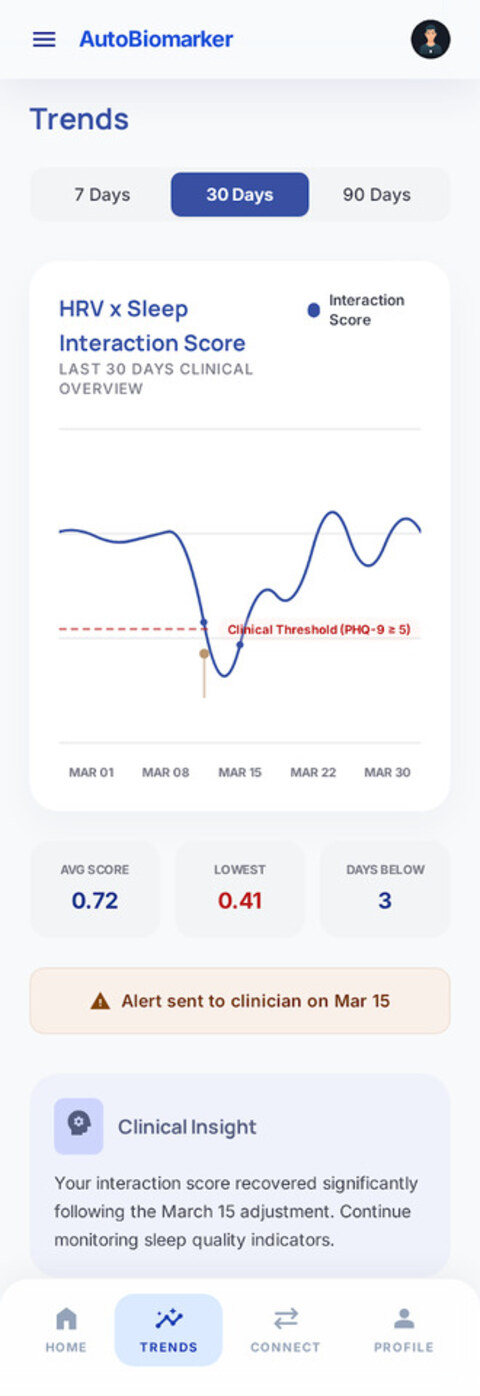
Designed to support clinical monitoring, not replace clinical judgement.
Early findings suggest wearable-derived physiological patterns may help distinguish depressive states from healthy controls, providing a foundation for continued research.

Built by The Alpha Nova, with clinical guidance from Prof. Dr. Steffen Moritz (University of Hamburg).
Be among the first to hear about SIGNA's progress and early beta access.